

- This event has passed.
Roundtable on Systems in Services (led by ISSIP Ambassadors)
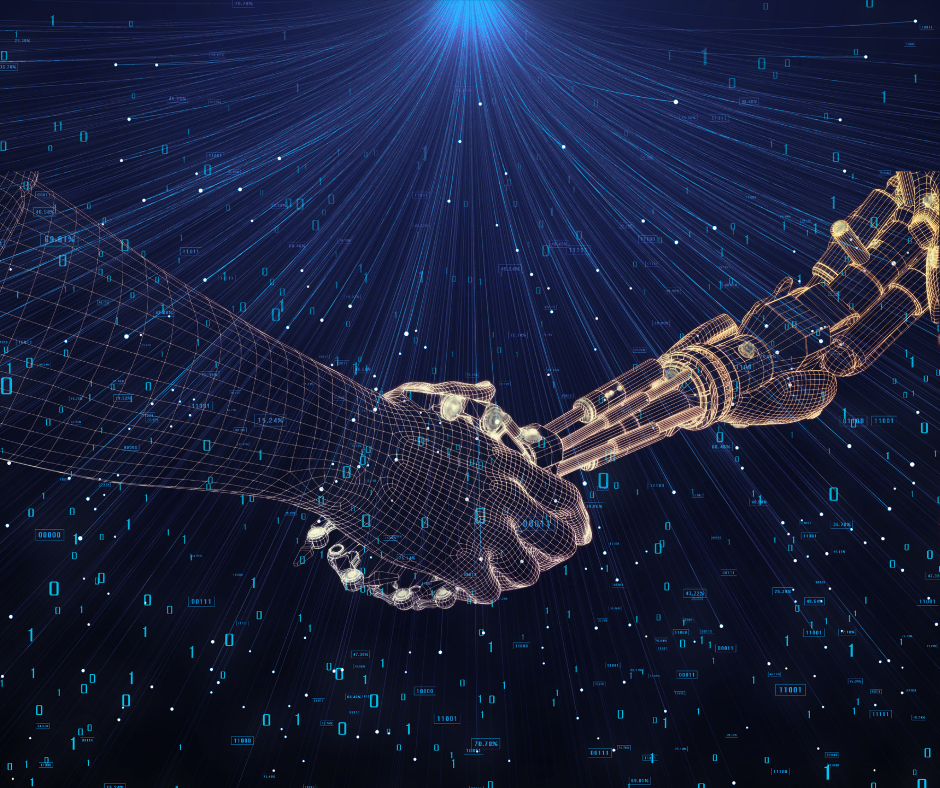
Many thanks to the organizers, panelists, and participants for a lively discussion on the topic of AI augmentation and automation across service systems.
Recording: https://youtu.be/KmkfRxWwDgk
Summary & Chat: https://www.slideshare.net/slideshow/20250715-roundtable-on-systems-in-service-series-ai-augmentation-and-automation-docx/281643335
Topic: Where can service systems benefit more from Intelligence Augmentation (IA), over AI Automation?
Intelligence Augmentation (IA) enhances and elevates human’s ability, intelligence, and performance with the help of information technology. IA stresses human-machine collaboration or human-machine symbiosis where machines perform what they do best (e.g., computing, recording, and doing routine, repetitive work) to aid humans in doing what humans do best (e.g., abstract reasoning, creating, and making in-depth discoveries about people and the world). Don Norman (2014, p. 225) says: “the automation works best when conditions are normal. When conditions become difficult…then the automation is also likely to fail. In other words, the automation takes over when it is least needed, gives up when it is most needed”.
A 2020 ICIS panel (Zhou, Paul, et al. 2021) listed some research area for IA:
* Education (learning)
* Medicine
* Business
* Disaster Management
* Environmental and urban studies
* Human cognition
* Regulation
A 2022 HICSS panel (Zhou, Rudin, et. al. 2023) identified some risks with IA:
* User privacy
* IA misuse
* Deskilling
* Emotional Attachment and Detachment
Service systems apply resources (e.g. knowledge, goods, technology) for the benefit of others.
Much of the attention on AI (more specifically, Generative AI) has been on automating work. Where can service systems make a positive difference with IA? Which risks might make IA a bad bet? Join this Roundtable on Systems in Services to share perspectives and gain insight collectively. The Roundtable operates much like a call-in radio shows in the analog age. Discussion is sparked by a few discussants providing a systems lens on services. A moderator monitors online chat, and draws participants in to voice their comments. The session concludes with reflections in key insights surfaced. Slideshows and manifestos are discouraged. An open systems approach may generate new connections, both conceptually and socially, across ISSIP members. Recordings of each session will be posted on ISSIP video channels. This Roundtable series is supported by members of the Creative Systemic Research Platform Institute, as ambassadors for ISSIP.
References:
* Norman, D. (2014). Things that make us smart: Defending human attributes in the age of the machine. New York, NY: Diversion Books.
* Zhou, L., Paul, S., Demirkan, H., Yuan, L., Spohrer, J., Zhou, M., & Basu, J. (2021). Intelligence Augmentation: Towards Building Human-Machine Symbiotic Relationship. AIS Transactions on Human-Computer Interaction, 13(2), 243-264. https://doi.org/10.17705/1thci.00149
* Zhou, L., Rudin, C., Gombolay, M., Spohrer, J., Zhou, M., & Paul, S. (2023). From Artificial Intelligence (AI) to Intelligence Augmentation (IA): Design Principles, Potential Risks, and Emerging Issues. AIS Transactions on Human-Computer Interaction, 15(1), 111-135. https://doi.org/10.17705/1thci.00185
Roundtable Series Chairs: David Ing and Gary Metcalf. ISSIP Ambassadors to Creative Systemic Research Platform Institute (CSRP Institute)


AI Image Prompt: Create a monochromatic image of threads weaving into fabric in a grid to convey a world of overlapping service systems.